Menu

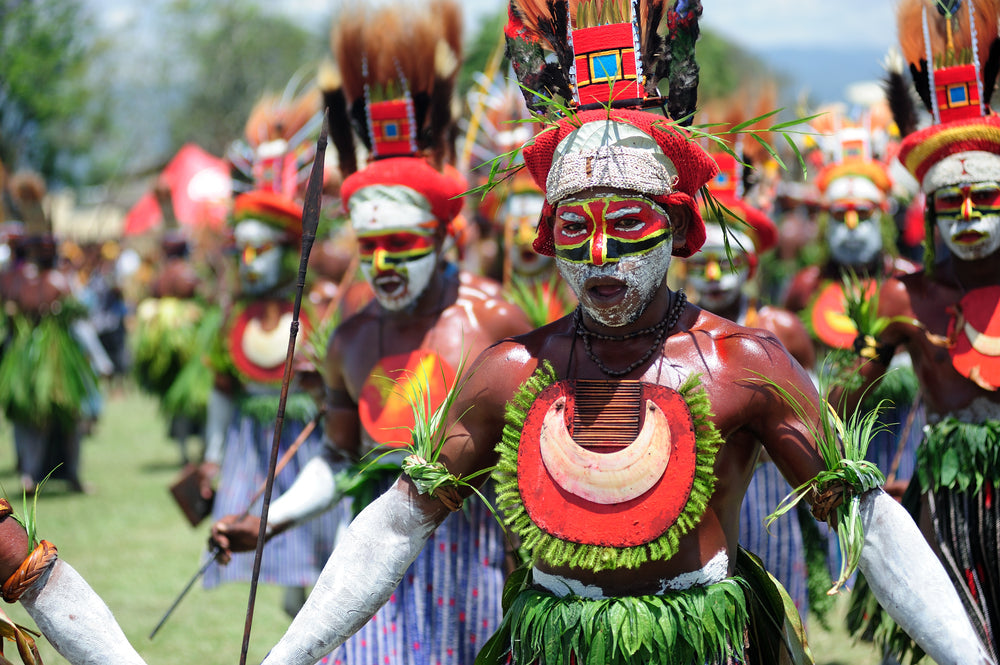

Seriously Cool People Grow Papua New Guinea Peaberry Coffee
September 18, 2023 5 min read
Seriously Cool People Grow Papua New Guinea Peaberry Coffee
Papua New Guinea Coffee: A Wild Frontier with a Reputable Coffee Industry
Papua New Guinea is a small country in Oceania, just north of Australia, and it is one of the more fascinating coffee-growing regions in the world. The country is incredibly diverse, with more than 800 languages spoken and much of the population living outside urban areas.
It is also home to a serious coffee industry.
The first coffee plants arrived in Papua New Guinea in the 1800s, but commercial coffee production really began to develop in the 1920s. Today, the country is known for high-grown Arabica coffees produced in its mountainous highlands.
Depending on where the coffee is grown and how it is processed, Papua New Guinea coffee can show notes of chocolate, berries, tropical fruit, nuts and spice, along with a full body and balanced acidity.
Much of the country's coffee is grown by smallholder farmers, often on small plots or village coffee gardens. There are also larger coffee estates with more centralized growing and processing operations.
That combination is part of what makes Papua New Guinea coffee so interesting. You can taste very different expressions from the same country.
What Makes Papua New Guinea Coffee Special?
Several things come together to give these coffees their character:
- High elevations: Much of Papua New Guinea's Arabica coffee is grown in mountainous areas where elevation and cooler temperatures can help coffee cherries mature gradually.
- Rich soils: Coffee-growing regions benefit from fertile soils and conditions well suited to Arabica coffee.
- Different growing regions: Papua New Guinea has varied terrain and microclimates, so coffees can taste quite different depending on where they are grown.
- Smallholder coffee farming: A large portion of the country's coffee comes from small farms and village coffee gardens.
- Processing: How the coffee cherries are handled after harvest can have an enormous influence on what ultimately develops in the cup.
For us as coffee roasters, that last point is especially interesting. Two coffees grown in Papua New Guinea can have noticeably different personalities depending on where they came from and how they were processed.
Characteristics of Papua New Guinea Coffee
Much of the coffee grown in Papua New Guinea comes from smallholder coffee farms and village coffee gardens, with the remainder coming from larger estates and plantations.
There can be a distinct difference in the taste profiles of these coffees, and processing is one reason why.
Papua New Guinea estate coffees are generally processed through centralized facilities where ripe coffee cherries can be pulped, fermented, washed and dried under more controlled conditions. These coffees can produce a clean, mild cup with balanced acidity, sweetness and a smooth finish. Smallholder coffees can be different.
Coffee grown by small farmers in areas such as the Western and Eastern Highlands may be handpicked before being brought to a central processing facility. Depending on the coffee and processing, these lots can show a wonderfully wild side, with pronounced fruit, sweetness and a full body.
We've tasted Papua New Guinea coffees with everything from chocolate and nuts to mango, papaya and other ripe fruit notes.
That's why describing "Papua New Guinea coffee" with a single flavor profile doesn't really do the origin justice.
What Is Papua New Guinea Peaberry Coffee?
This is where things get even more interesting. Most coffee cherries develop two seeds, which grow against each other and produce the familiar coffee bean with one rounded side and one flatter side.
Occasionally, a coffee cherry develops one seed instead of two. That single seed grows into a smaller, rounder bean known as a peaberry.
Peaberries are separated from regular coffee beans during sorting because of their different size and shape. Does being a peaberry automatically make a coffee better? No.
We still care about the quality of the green coffee, where it was grown, how it was harvested and processed, and how it is roasted. A peaberry is interesting, but the coffee itself still has to be exceptional.
When those things come together, though, Papua New Guinea Peaberry Coffee can be something special.
And when we find a coffee like that, we get excited about roasting it.
Papua New Guinea Coffee: Interesting Facts
Coffee has been part of Papua New Guinea's agricultural history for generations, and the highlands provide some of the country's most important coffee-growing areas.
The industry is also closely tied to smallholder farming. Coffee provides income for farming families and communities throughout the coffee-growing regions.
That's something worth remembering when you drink a cup of coffee from Papua New Guinea.
Before those beans ever reach a coffee roaster, people have planted the trees, tended them, picked ripe coffee cherries, processed the coffee, dried it, sorted it and prepared it for export. There are a lot of hands behind a great cup of coffee.
You can learn more about the people behind the coffee in Women Coffee Farmers in Papua New Guinea.
Papua New Guinea Coffee: A Hidden Gem
Papua New Guinea doesn't have the same name recognition among American coffee drinkers as origins such as Colombia, Ethiopia or Costa Rica.
That's part of what makes discovering a great Papua New Guinea coffee so much fun.
The country can produce coffees with remarkable depth and character, from clean and balanced estate coffees to fruit-forward smallholder lots. For coffee drinkers who enjoy exploring different origins, Papua New Guinea deserves attention.
It's also the kind of origin that keeps us interested as roasters. You don't simply look at the words "Papua New Guinea" on a bag of green coffee and know exactly what you're going to get.
Why We Hand Roast Papua New Guinea Peaberry Reserve Coffee
When we find an exceptional coffee, our job isn't to cover it up with the roast. It's to figure out what makes that particular coffee interesting and roast it in a way that brings those qualities into the cup.
That's particularly important with a coffee like Papua New Guinea Peaberry.
We look for balance, body, sweetness and depth while preserving the character that made us want the coffee in the first place.
That's also the thinking behind our Reserve Coffee program. These are coffees we believe deserve individual attention and careful small-batch roasting.
If you're curious about what Reserve means at Weaver's, read What Is Reserve Coffee?.
Papua New Guinea is a fascinating coffee origin. Peaberry coffee is fascinating in its own right. Put the two together with a beautiful green coffee and careful roasting, and you have something we genuinely get excited about.
And since some seriously cool people grow this coffee, we think it's worth telling their story.
Subscribe
Sign up to get the latest on sales, new releases and more …